
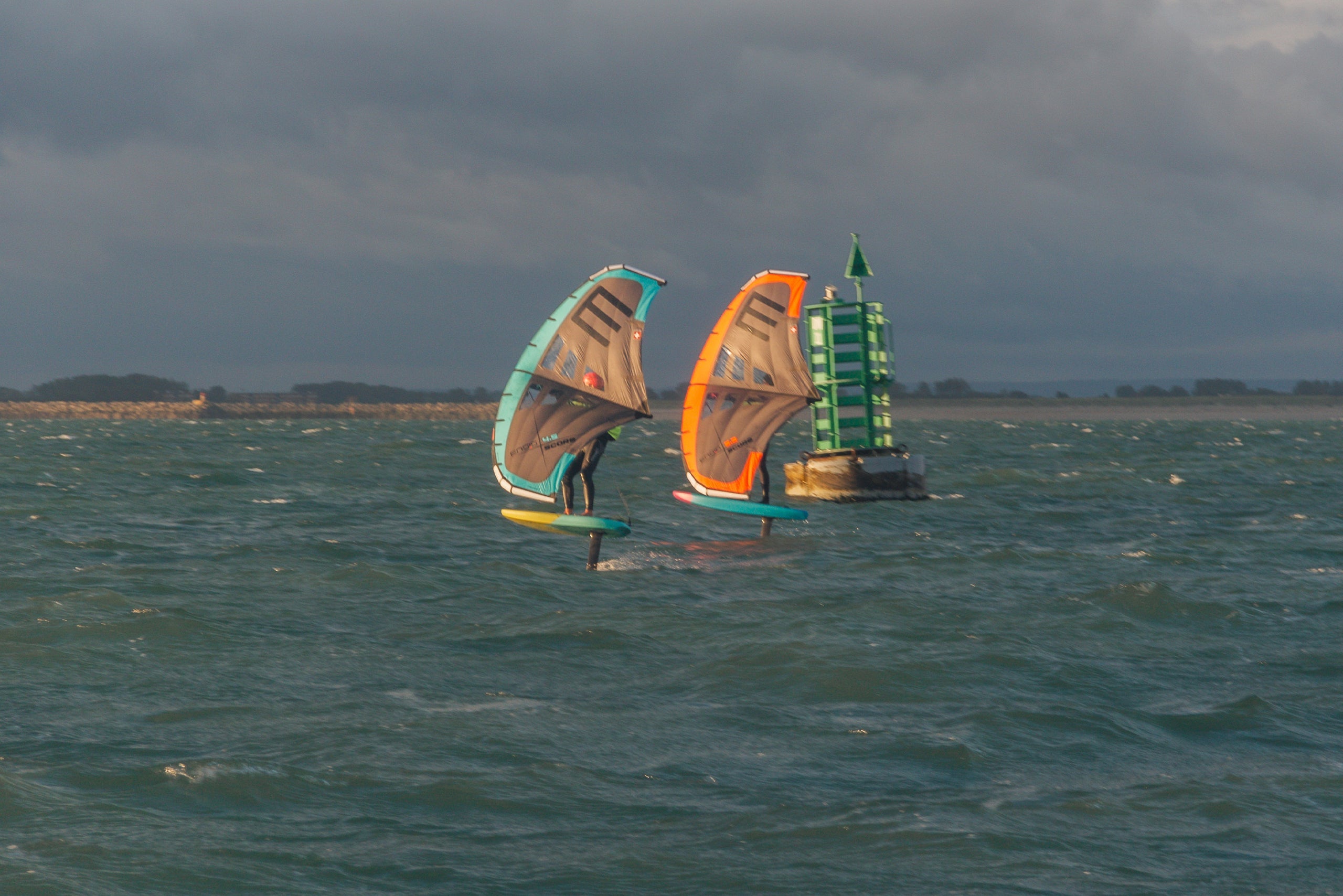
On September 7th, Duchenne World Awareness Day, wingfoilers Doré De Morsier and Yo Wiebel successfully completed their challenging wingfoil journey across the English Channel. The goal was to raise awareness and funds for Duchenne muscular dystrophy (DMD). Covering about 60-70 nautical miles from Cherbourg, France, to the Needles in England, they faced strong tides, tricky currents, and busy shipping lanes. ENSIS proudly supported their effort, which combined their love of wingfoiling with a cause close to their hearts.

A Challenge Well-Prepared For
After the crossing, Yo Wiebel shared how they prepared for the trip and dealt with tough conditions on the water. Equipped with safety boats, GPS trackers, and different wing sizes, they made sure they were ready for whatever came their way. Despite the changing winds, rough waves, and a few crashes, Yo and Doré completed the journey, showing great determination.
This adventure wasn’t just about wingfoiling—it was about supporting those affected by Duchenne muscular dystrophy, a disease that keeps many from doing the activities we enjoy. For Yo, the cause is personal, and this crossing was a way to bring attention and help to those in need.

Chatting with Yo
The Duchenne Boys fundraiser is traditionally a run, what made you decide to take the challenge on water?
Last year, I was in Brazil for the whole autumn, so I couldn’t attend the Duchenne Run. That’s when the idea for Foil4Duchenneboys started. Balz liked the idea, and we did a long downwinder of 130 km along the Brazilian coast last year. We wanted to do more. This year, unfortunately, Balz couldn’t join, so I asked a few other riders, and Doré was in.
It was a long trip. Did you guys pack a lunch? Jokes aside, what did you have to arrange to ensure a safe trip—support boats, GPS systems, etc.? I'm really interested in any special preparations one might not consider when traveling over 100 km to another country while foiling.
Of course, we packed lunch! ;-) Seriously, yes, we had small backpacks or carried stuff in our life vests. We both had big Camelbaks with energy drinks inside, as well as a few nut bars and cereal bars. Regarding safety, I have some experience from other trips on small sailing boats. We were the first people to foil around Cape Horn in 2015 on a Nacra 20 FCS (with Franck Cammas). In 2017, we set an unofficial 24-hour record on the same boat, covering 361 nautical miles (with Simon Koster). In 2019, I crossed the Channel from Cowes to St. Malo on a 15ft foiling catamaran (with Tamara Baumann), so I’m kind of used to this stuff. We both had a waterproof VHF radio and a waterproof cellphone. Furthermore, we brought a GPS with a tracking function, so everyone could follow us live.
For this trip, it was the first time we chose to have a safety boat. It was always within 500 meters of us. We decided to have it in case we damaged equipment or injured ourselves. It’s also a very busy shipping route, with huge cargo ships that wouldn’t see us on their instruments and wouldn’t even notice if they ran us over. That’s why we chose to go with a support boat!

What were the conditions like during the crossing, did yourself or Doré run into any problems on the water?
The conditions were very different from our lakes back home—challenging. We didn’t encounter any major problems, but it was really difficult, and we crashed a lot more than we expected. The wind was between 12 and 31 knots and changed often. The weather fluctuated a lot; we had both sun and rain. The biggest challenge was the sea state and the waves. In the beginning, the waves came with the tidal current, so it was manageable. But after 2 hours, the tidal current switched, and it came against the wind. The waves grew steeper and more chaotic. Combined with the waves from all the cargo ships and ferries, it was complete mayhem. It wasn’t possible to find a rhythm with the waves—just when you got comfortable, the conditions changed again. Moreover, there was a lot of seaweed, so if you didn’t pay attention, you’d crash.
The channel is notorious for changing wind and ocean conditions, how did you decide what size wing to take, if the conditions did change, were you able to swap equipment?
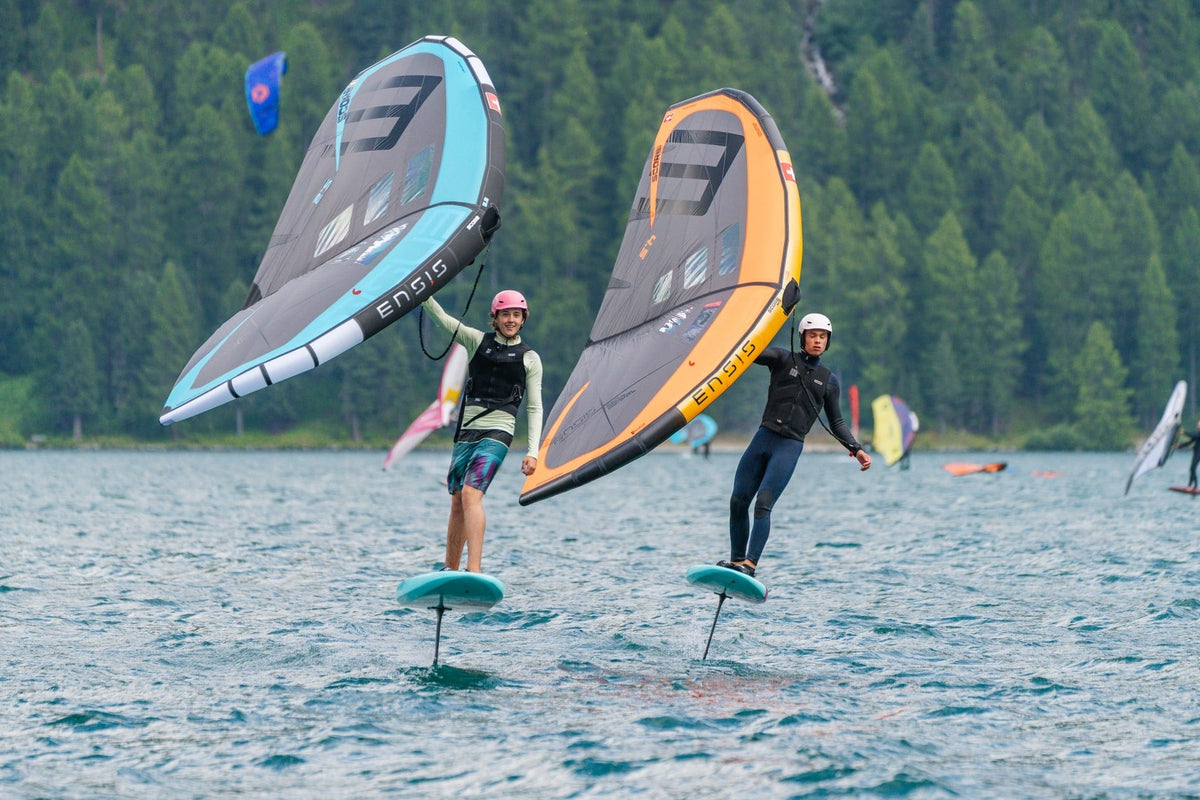
We started with a 4.5m wing but decided near Calais to go with a bit more power to ensure an easier start. We crossed using 5.2m wings. Yes, we had all sizes from 2.8m to 6.6m on the support boat, so we could adapt if the wind changed drastically. We both decided to use the ENSIS INFINITY, which glides early and has an impressive top speed as well.

You’re taking on these challenges for a noble cause. Why is the Duchenne Boys fundraiser so close to your heart? Is there anything you'd like people to know?
I personally know a boy affected by this disease, and it’s really hard to witness. Children with Duchenne muscular dystrophy lose muscle function over time. Their movements gradually regress, and as they get older, they require more technical support and eventually need assistance just to breathe. It’s incredibly tough for both the kids and their families. These children aren’t able to participate in the sports and activities that we love and enjoy, so my goal is to raise awareness, funds, and support for them.

Making a difference
Doré and Yo’s successful crossing of the English Channel shows how passion for wingfoiling can be used to support an important cause. Their dedication to raising awareness for Duchenne muscular dystrophy, despite the tough conditions they faced, is truly inspiring. By combining their skills with a meaningful purpose, they’ve helped bring attention to those who need it most, proving that sports can make a real difference. If you’d like to support the Duchenne Boys and Yo’s mission, visit foiling-school.com to donate.

Share:
The Power of Aluula in ENSIS’ New Wings
Latest wings and boards, available now!