
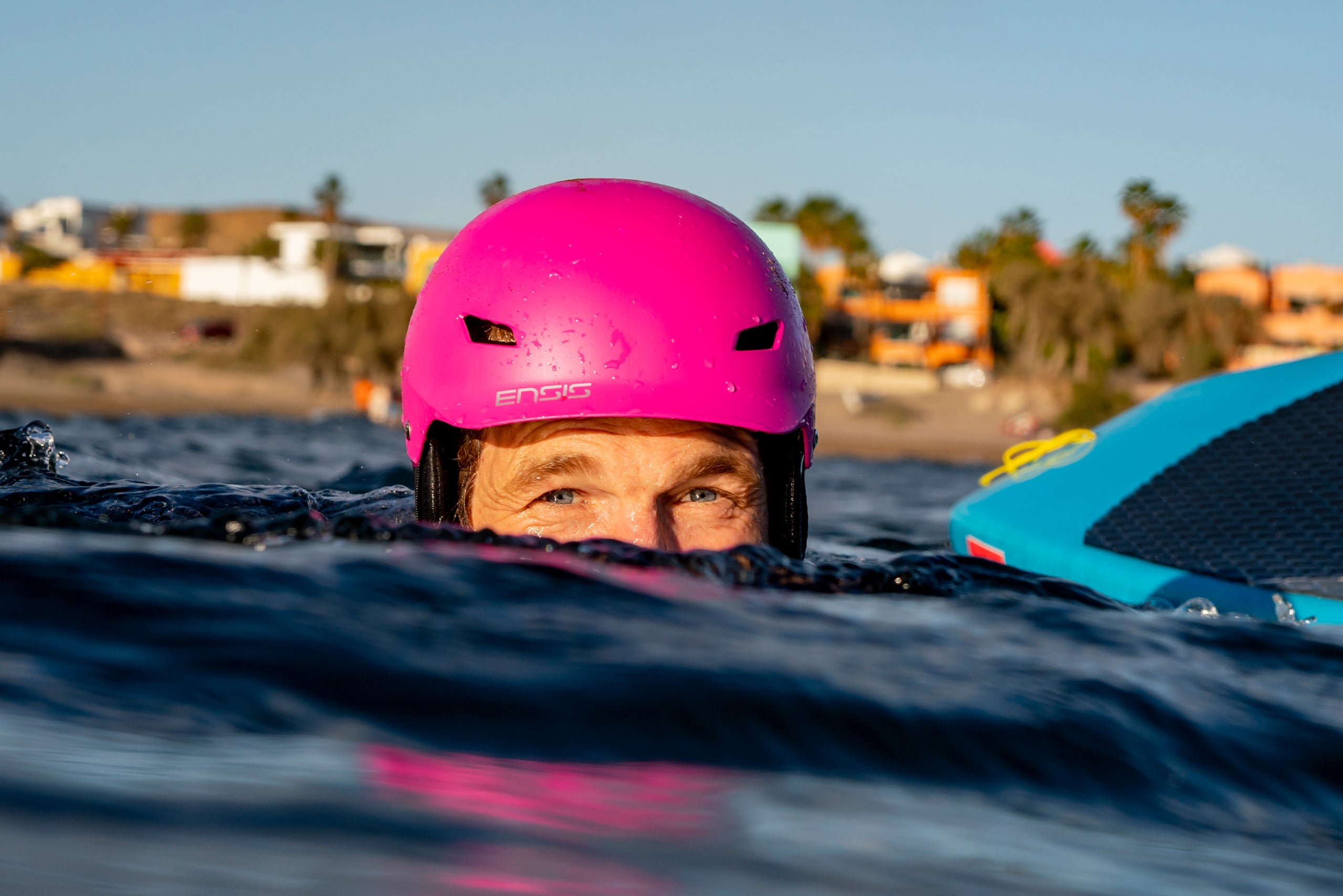
Wearing a helmet is smart – wearing one that fits properly is essential. A loose, wobbly helmet won’t protect you when you need it most. Whether you’re just starting out or going for huge moves, a helmet that fits right gives you better protection, more comfort, and more confidence on the water.
Why Fit Matters

A helmet that’s too loose can shift or even come off during a crash. One that’s too tight is uncomfortable and annoying to wear, especially during long sessions. When your helmet fits properly, you should forget it’s even there while you're on the water.
How to Measure Your Head
Getting the right size starts with a quick measurement. Use a flexible tape measure and measure the circumference of your head just above your eyebrows and ears. Then compare your measurement to the ENSIS helmet size ranges:

RIDER Helmet
Small: 52–55 cm
Medium–Large: 55–61 cm

BALZ PRO Helmet
Small: 51–56 cm
Medium–Large: 55–61 cm

DOUBLE SHELL Helmet
Small: 52–56 cm
Medium: 55–59 cm
If you’re between sizes, try both to see which gives you the best feel. The micrometric adjustment will help fine-tune the fit.
Adjusting Your ENSIS Helmet

All ENSIS helmets – the DOUBLE SHELL, BALZ PRO, and RIDER – feature a 360° micrometric fit system. Twist the dial at the back of the helmet until it feels snug. You should be able to shake your head without the helmet moving, but it shouldn’t squeeze or cause pressure.
For the chin strap, make sure it sits under your chin, not on your throat. You should be able to fit one finger comfortably between the strap and your chin.
For younger riders, the BALZ JUNIOR is built to the same standard as the adult model, just with smaller sizing. It’s not a compromise – just the right fit for smaller heads. And more comfort means less fuss about wearing it.
Fit Features to Consider
The DOUBLE SHELL and RIDER helmets come with removable ear pads, while the BALZ PRO has fixed ear protection. Ear pads help block wind, soften water impact, and keep your ears warm in colder conditions. On warmer days, or if you prefer more airflow, they’re easy to remove (on models with detachable pads).
Common Fit Mistakes to Avoid
If you’re planning on wearing a beanie or thick cap under the helmet, make sure you take that into consideration when sizing your helmet
Over-tightening the rear dial - can cause pressure points and headaches.
Not replacing a helmet after a serious impact – even if it looks fine, the internal structure might be compromised. If in doubt, replace it.
Ready to Ride? Make Sure Your Helmet Is Too

A well-fitting helmet is one you’ll wear without thinking about it – and that’s exactly the point. Whether you’re chasing tricks, racing, or just learning, make sure your helmet is dialled in before you hit the water. The right fit means better protection, comfort, and more confidence.
Share:
Chase the Horizon with the ENSIS JIVE Mid-length Board
Rider Spotlight: Thomas Goodricke