
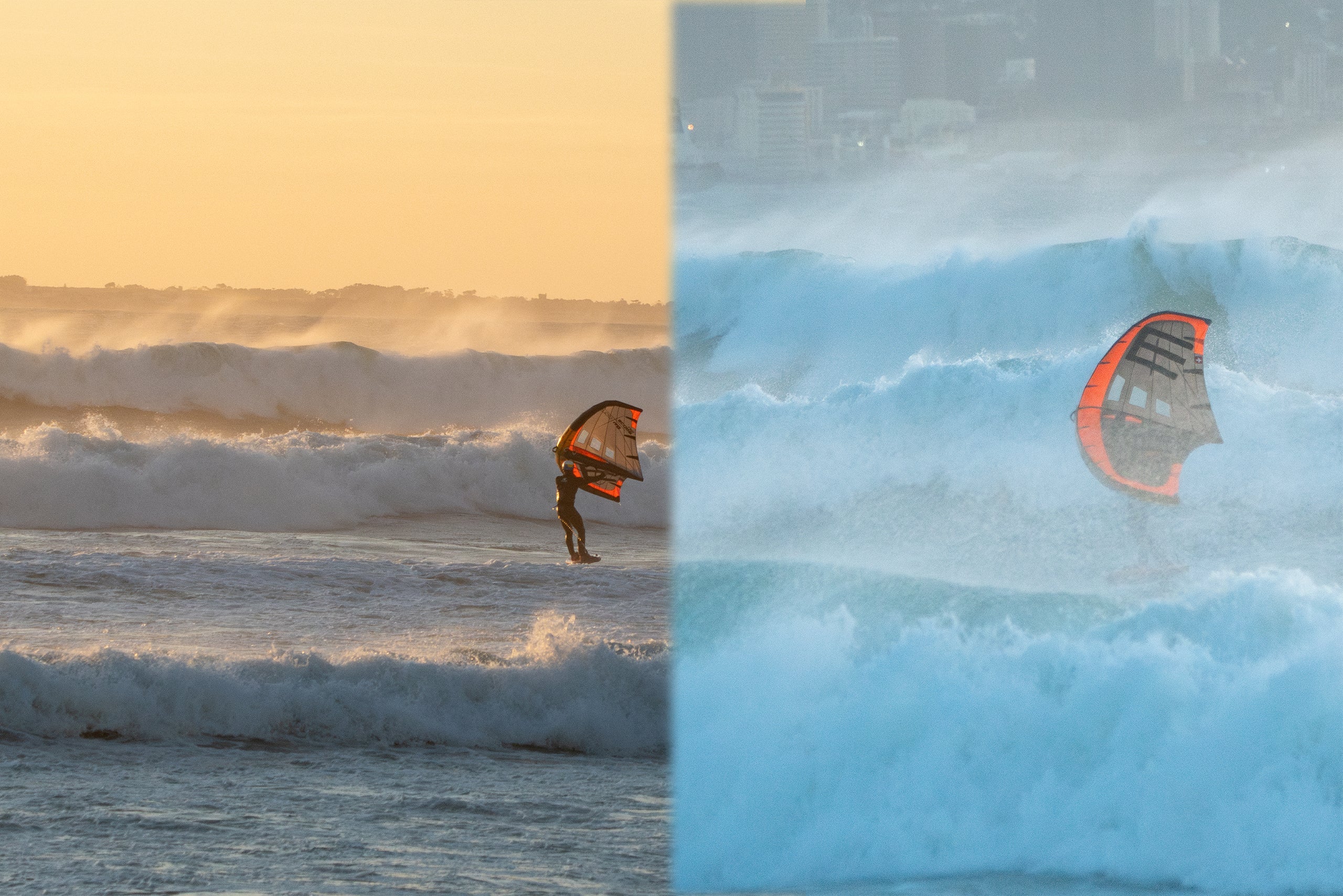
Whether you have access to the waves year-round or you’re just taking a holiday near the coast, wingfoiling in waves is something you should experience. However, wingfoiling in the ocean is a significant step up from flatwater. It requires skill and familiarity with your equipment. We will discuss how to approach your first ocean session and offer tips to make it easier.
Build Your Skills on Flatwater
Before heading to the ocean for a wingfoil session, ensure you’re confident on flatwater. You should have mastered handling your equipment, gybes, tacks, maintaining balance, and consistently getting on the foil. These foundational skills are essential before tackling the challenges of ocean conditions.

Stay Calm
Your mindset is crucial when heading into the ocean. Unlike flatwater, you’ll face additional challenges such as currents, waves, choppy water, and other riders. Staying calm will help you manage these conditions and keep your experience enjoyable.

Choose the Right Spot and Conditions
As your skills and confidence grow, the number of spots you can wingfoil will increase. For your first ocean sessions, choose a suitable location on a day with manageable conditions.
You’ll want to pick a spot with an easy entry and exit point, cross-shore or cross-onshore winds, and no hazardous obstacles downwind. A good indicator of a safe spot is the presence of other wingfoilers, windsurfers, or kitesurfers. If there are others around, don’t hesitate to talk to locals. Start on a day with moderate to strong wind and small waves.

Picking the right Gear
Having the right gear is critical:
Safety Equipment: Always wear a helmet, board leash, wing leash, impact vest, and an appropriate wetsuit for the water temperature.
Foil Size: Hydrofoils react to all the energy in the ocean. If you’re riding a larger foil, it can feel unstable and challenging to control. A smaller front foil, around 1600 cm² or less, is ideal for ocean conditions. Set the foil slightly further back in the tracks compared to your flatwater setup for better control.
Wing Size: Rig for the lulls. It’s better to have more power than being underpowered. Being well-powered makes it easier to get on the foil and navigate through the surf.

Managing the shore break
Water depth can make managing your wingfoiling gear tricky. On most beaches, you’ll need to get past the first set of breaking waves or shore break before it’s deep enough to get on the foil. Using front footstraps makes it much easier to hold onto and control the board as you work your way through the shallow surf.
Keep your equipment to the side or behind you when a wave approaches. Never place it in front of you, as a wave could knock it into you.

Stay Beyond the Breaking Waves
When you head out, don’t linger near the breaking waves. Commit to getting past them, then stay in deeper water away from the break. This allows you to get comfortable in the conditions.

Avoid long walks, use a landmark!
The ocean is vast! Pick a landmark on the shore to help you keep track of your position so you avoid long walks on the beach.

Catching Your First Wave
When you’re ready to ride waves, start small. Choose a small swell, accelerate in the same direction the swell is running, and depower the wing. Begin by riding in a downwind direction, as this makes it easier to stay on the swell; riding upwind will slow you down.

We’ve got what you need
We’ve got everything you need to enjoy the waves. Wingfoiling in the ocean is an incredible experience, and riding waves adds a whole new level of fun to the sport. If you’re looking for gear that performs exceptionally in ocean conditions, our SCORE and SCORE Limited Edition wings are light, balanced, and super stable when riding on the neutral handle. Along with our ROCK’N’ROLL boards - compact, durable, and built to handle the challenges of the sea. If you haven’t checked them out yet, now’s the time!


Share:
ENSIS in 2024
Visit ENSIS at Boot Düsseldorf 2025