Hydrofoil Parts Explained
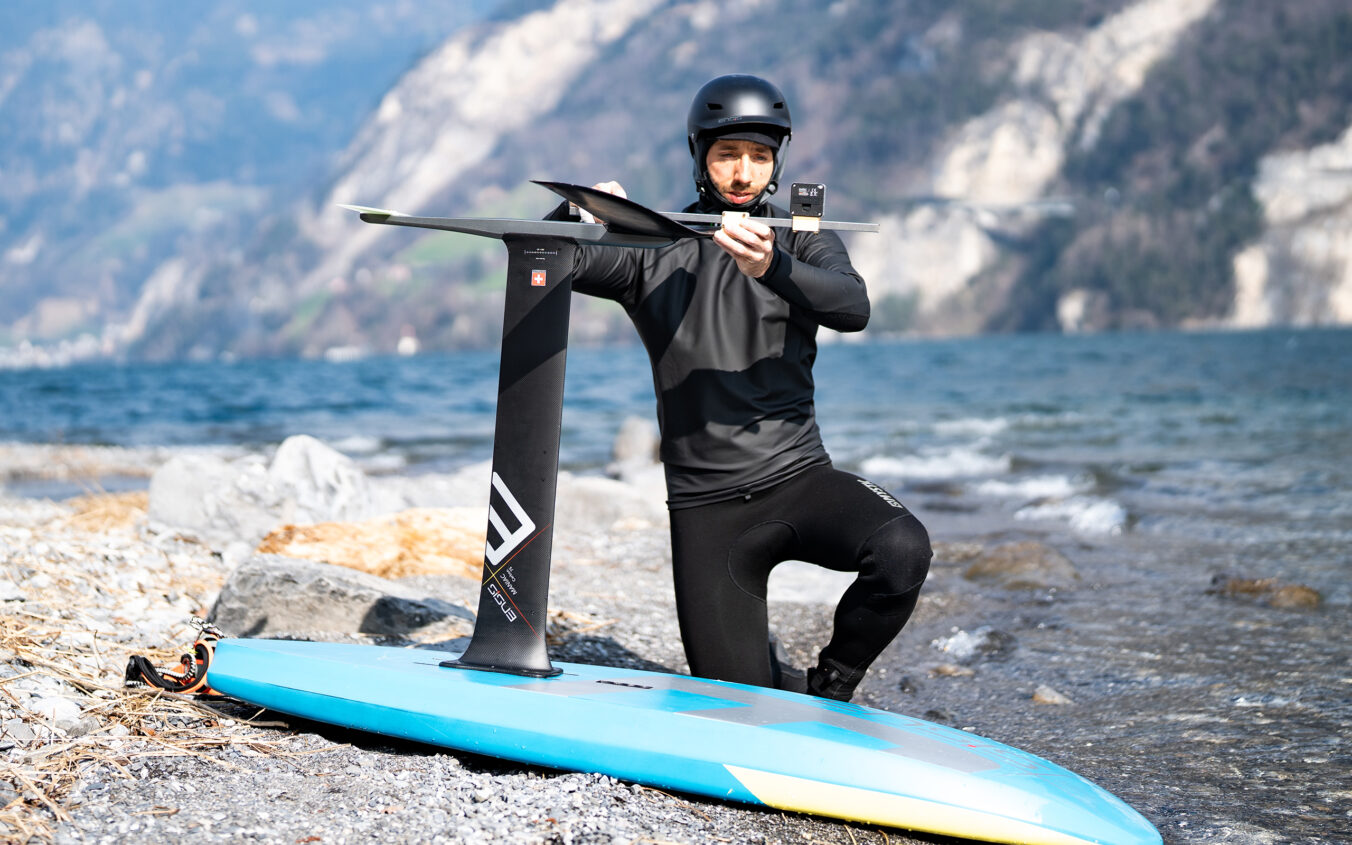
A simple guide to hydrofoil basics
Foiling comes with a whole new language. Aspect ratio. Fuselage. Stabilizer. Mast length. If you are new to foiling, it can feel like everyone else got a rulebook that you missed.
The truth is much simpler. Once you understand the basics, hydrofoils start to make sense very quickly. Every foil uses the same core parts, and each one plays a clear role in how the foil feels on the water.
In this guide, we break down hydrofoil parts explained in plain English. No formulas. No hype. Just the basics you actually need to understand how a foil works and why different setups feel so different.
The Main Parts of a Hydrofoil

At its core, every hydrofoil consists of a few key components. Designs and materials change, but the concept stays the same. These foil parts work together to create lift, control, and stability once you are up and flying.
To start, let’s look at the parts that do the flying.
The Hydrofoil Wings
The wings create lift and stability and allow you to rise out of the water. Because of this, small changes here make a big difference to how a foil feels.
Front Wing

The front wing provides the main lifting surface of the hydrofoil. Its size, shape, and outline control how early the foil lifts and how fast it feels once flying.
Larger front wings generate more lift at lower speeds. As a result, they feel easier to ride and more forgiving. Smaller wings, on the other hand, need more speed to get going but feel faster and more agile once moving.
For this reason, beginner foils often use larger wings, while more experienced riders tend to downsize as their skills improve.
At ENSIS, the MANIAC foil range covers riders of all skill levels and disciplines. The ENSIS PACER targets beginners and casual wingfoilers, while the ENSIS INFINITY ACE suits intermediate to advanced riders looking for more speed and performance.
Stabilizer
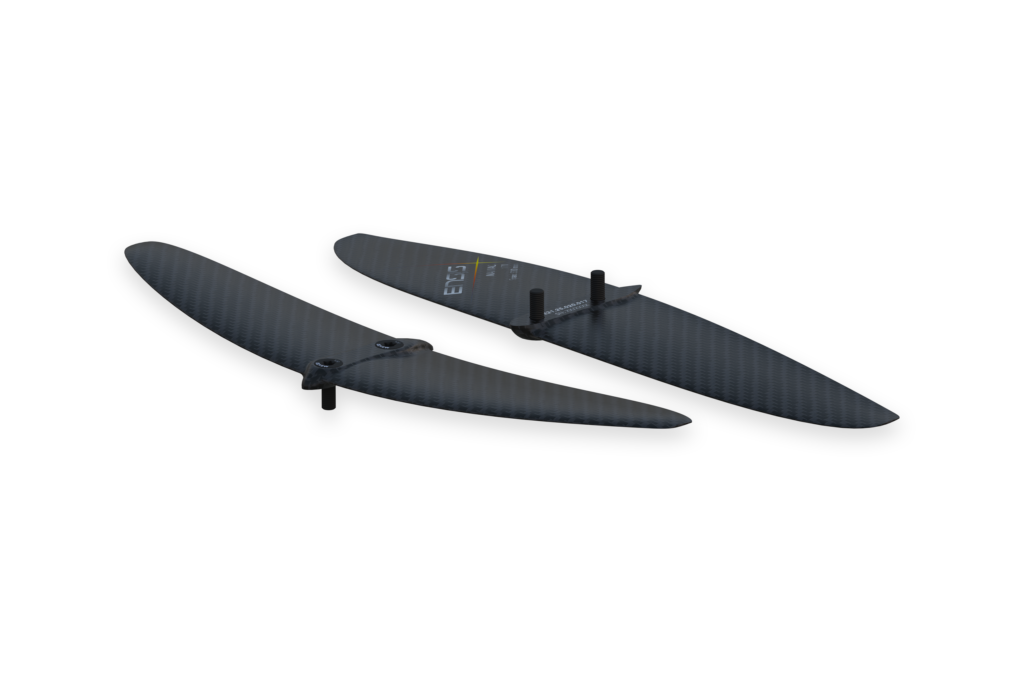
The stabilizer sits behind the front wing and helps keep the foil balanced. In practice, it plays a major role in how stable the foil feels once flying.
A larger stabilizer adds pitch control and stability, which makes the foil feel smoother and more predictable. A smaller stabilizer, by contrast, loosens things up and allows quicker turns, although it demands better control from the rider.
Because of this, changing the stabilizer offers one of the easiest ways to fine tune how a hydrofoil feels without changing the entire setup.
The Connection Pieces
These parts connect everything together and strongly influence stiffness, control, and feedback.
Fuselage
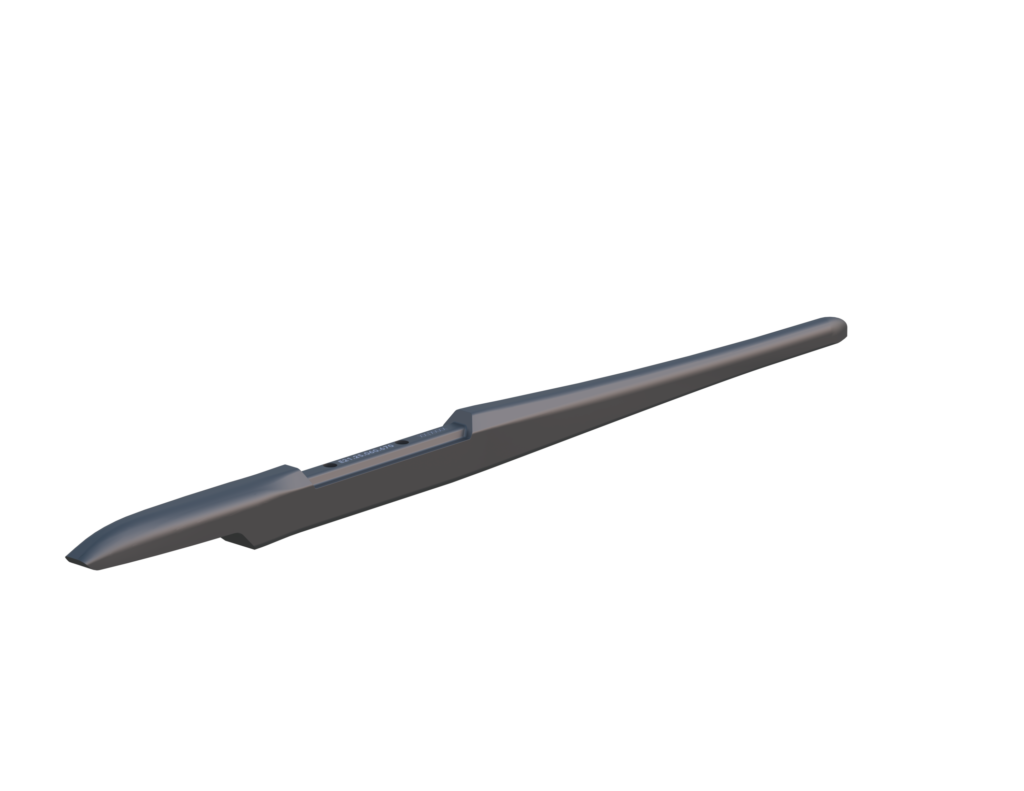
The fuselage connects the front wing, stabilizer, and mast.
A longer fuselage increases stability and smoothness. A shorter fuselage, meanwhile, makes the foil feel more responsive and quicker to turn.
Even small changes in fuselage length can noticeably change how a foil feels, especially when carving or riding waves.
Shim
A shim is a thin spacer that sits between the stabilizer and the fuselage and slightly changes the stabilizer angle.
Small adjustments here can make a noticeable difference. For example, adding a shim can increase lift and stability. Removing a shim or changing the angle can reduce drag and loosen up the feel.
Shims offer a simple way to fine tune how a foil feels without swapping major components. However, at ENSIS we see shims as an unnecessary extra. Instead, we design our foils to work plug and play. We do the tuning during development so riders can bolt everything together, go ride, and enjoy a setup that feels optimised straight out of the box.
Monobloc
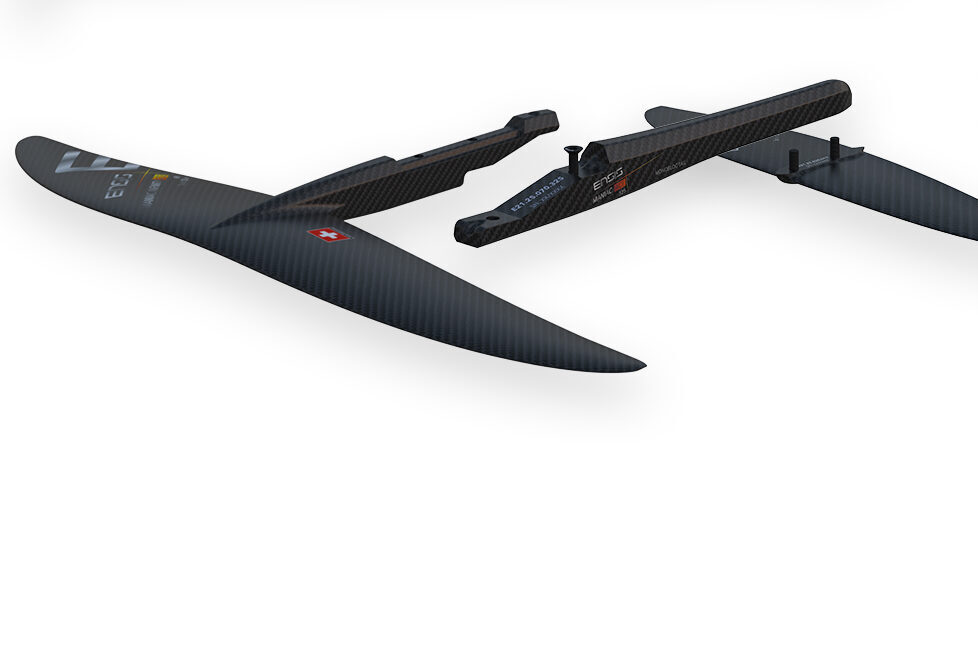
Monobloc means the front wing and fuselage form a single piece.
Because this design reduces connections and bolts, it increases stiffness and direct feedback. At the same time, it limits flex and movement between parts.
In the ENSIS MANIAC range, foils that use monobloc designs include the ENSIS INFINITY ACE and ENSIS STRIDE ACE.
The Mast and Baseplate
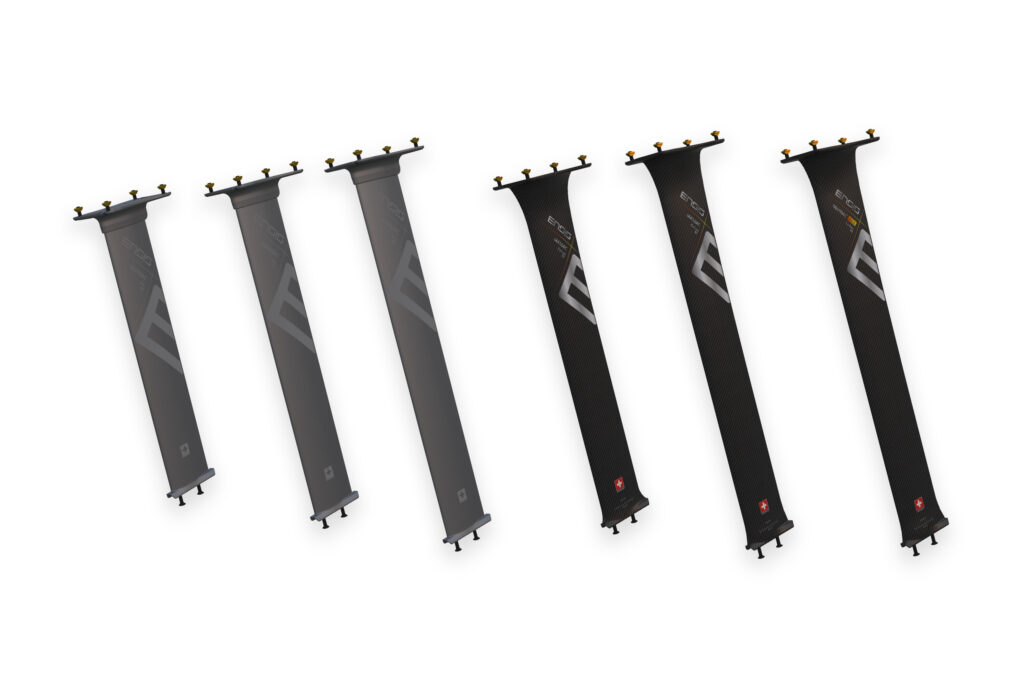
The mast connects the foil to the board and controls how high you ride above the water.
Shorter masts feel easier to learn on and more controlled in shallow water. Longer masts, by contrast, offer more clearance in choppy conditions and feel more forgiving at higher speeds.
Most foil systems offer aluminium and carbon fiber masts. Within the MANIAC range, both options are available, read more about the full MANIAC system at our World of Foils landing page.
Baseplate
The baseplate connects the mast to the board. On most carbon masts, this forms a single integrated piece. On aluminium masts, the mast and baseplate usually remain separate parts bolted together.
Wing Design Terms That Matter
Once you understand the physical parts of a hydrofoil, the design terms and numbers start to make much more sense.
Foil Aspect Ratio, Chord, Area, and Span (cm²)
How wing shape affects feel
Aspect ratio, chord, area, and span all describe the size and shape of a foil wing. Together, they explain why different wings feel so different on the water.
Aspect ratio describes how long and narrow a wing is compared to how wide it is front to back. In simple terms, it describes the relationship between span and chord.
Low aspect wings are shorter and wider. Because of this, they stall later, turn easily, and feel stable and forgiving. High aspect wings, in contrast, are longer and narrower. As a result, they glide better and carry speed more efficiently once flying.
Span, chord, and area explained
Span refers to the total length of the wing from one tip to the other. Wings with more span usually feel more efficient and glide better. Shorter span wings feel more compact and tend to turn tighter. For example, two wings can share the same area but feel very different if one has more span and the other is shorter and wider.
Chord is the width of the wing from the leading edge to the trailing edge. A wider chord adds lift and control at lower speeds. A narrower chord reduces drag and feels faster, but it needs more speed to stay flying.
Wing area, usually shown in square centimeters (cm²), describes how much surface area the wing has. Larger wings generate more lift at lower speeds. Smaller wings, on the other hand, feel faster and more agile.
Within the ENSIS range, the PACER sits on the lower aspect side for easy and forgiving riding. Meanwhile, the STRIDE uses a very high aspect shape designed for pumpfoiling and dock starts.
Ultimately, none of these numbers matter on their own. Instead, they work together. A wing with high aspect, small area, and narrow chord will feel completely different from a wing with lower aspect, larger area, and wider chord.
Watch our Tech Talk with Jan Pütz designer of the ENSIS MANIAC FOIL explaining aspect ratio and glide!
Stall Speed
Stall speed describes the slowest speed a foil can fly before it loses lift and drops back into the water.
Foils with a low stall speed feel easier to ride. They lift early, stay flying at slower speeds, and remain forgiving during take offs, foot switches, and transitions. Foils with a higher stall speed, however, feel faster and more efficient but require better speed control.
Wing area, profile, aspect ratio, and stabilizer setup all influence stall speed. Because of this, even small design changes can noticeably affect how forgiving a foil feels.
Profile
Profile describes the shape of the airfoil and, in everyday conversation, usually refers to how thick the wing is and how curved it is.
Thicker profiles tend to lift earlier and feel more forgiving. Thinner profiles, by comparison, feel more efficient at speed but generally produce less lift.
For this reason, profile helps explain why two wings with the same size and aspect ratio can feel very different on the water.
Watch our Tech Talk with Jan Pütz designer of the ENSIS MANIAC FOIL explaining profiles and camber!
Tech Talks
We have covered a wide range of foil design topics with our foil designer Jan Pütz. If you want to dive deeper into any of the topics covered by our tech talks, these videos offer a great next step.
Why Does a Foil Sing or Whistle?
Why Does a Foil Fly?
Final Thoughts

Foiling does not need to feel complicated. Once you understand hydrofoil parts at a basic level, choosing the right setup becomes much easier.
You do not need to memorise every term or number. Instead, start with the basics, spend time on the water, and let experience fill in the gaps.
Over time, these concepts start to click. And once they do, tuning your foil becomes part of the fun.
Interested in anything wing or foil?
If you’re into wingfoiling or foiling and want to stay updated on events, demos, or the latest ENSIS gear, follow us on social media or check out our DEMO DAY page for upcoming opportunities. Whether you’re just getting started or looking to level up, our experienced team and worldwide retailers are here to help. Reach out to learn more or find an ENSIS retailer near you!